Who: VN Publisher Joseph Connelly
What: Dr. Fuhrman Health Getaway 2010
Where: Rancho Bernado Inn, San Diego, Calif.
When: July 11–17, 2010
Why: Conference recap
The Scoop: I just coined the phrase "open-minded skeptic." I went into the 4th annual Joel Fuhrman seven-day conference with the Jekyll-and-Hyde task of listening and learning free of judgment, while simultaneously checking my critic at the door. Read for yourself if I succeeded with these Press Pass posts from last week.
Where: Rancho Bernado Inn, San Diego, Calif.
When: July 11–17, 2010
Why: Conference recap
The Scoop: I just coined the phrase "open-minded skeptic." I went into the 4th annual Joel Fuhrman seven-day conference with the Jekyll-and-Hyde task of listening and learning free of judgment, while simultaneously checking my critic at the door. Read for yourself if I succeeded with these Press Pass posts from last week.
At the heart of Dr. Fuhrman's work is his nutritarian diet, described as "a person who strives for more micronutrients per calorie in their diet-style." During one lecture Fuhrman also mentioned that the plan "is really a longevity program; 95 to 105 should be the average age" one lives to while remaining active. Exercise is a large component of the lifestyle as well. Most would find the diet quite limiting, as it excludes all salt, sugar, and refined oils. In the name of participatory journalism, I played along, and with the abundance of fresh fruits, salads, and savory foods prepared for us three times a day, it was easy to follow the program. By the end of the week, I felt great, and my notorious sweet tooth was in check.


Color my world: The nutritarian smorgasbord
Much like the macrobiotic diet, the nutritarian diet can be—but is not exclusively—vegetarian. Both allow small amounts of meat, but neither recommend dairy products. In a previous post I explained Fuhrman's ANDI Scoring System for foods (a rating of nutrient density), and one look at his chart shows animal products far down the list. The rationale goes something like this: the big three of oil, salt, and sugar are addictive (and therefore need to be eliminated completely); flesh foods are not (are therefore don't). While I'd challenge this science (for example, maybe bacon itself isn't addictive, but would anyone eat it if it was not fried in oil and salted?), I don't really have to. The issue shouldn't be whether salt is addictive and salmon not, but rather what's best when viewed through a wide-angle lens.

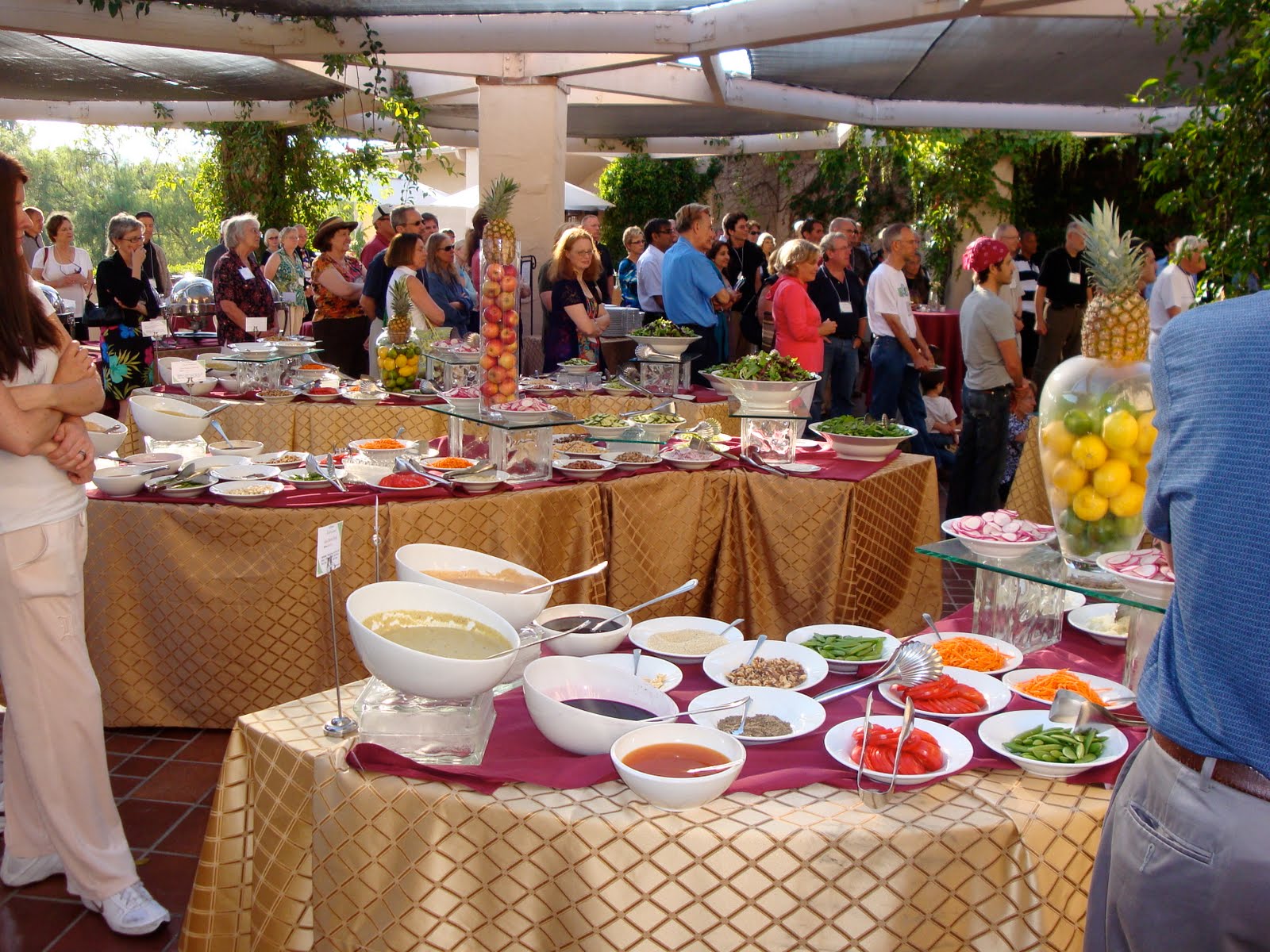
Attendees of the Dr. Furhman Health Getaway 2010 were well fed
If you are ill and would like to reverse your diabetes, heart disease, or lupus, a nutritarian diet could be for you. Fuhrman has many success stories, though to be fair I've heard the same from folks who follow a strict macrobiotic diet as well. Strict is the key word here, because those of us who are not seriously sick and need to live and work in a non-nutritarian world will not only be challenged to follow the regime, but with introspection will question parts of it. Does the fish contain mercury or other toxins? What about the oceans? Doesn't The China Study say that any amount of animal protein increases your risk of cancer? Does it say the same about a piece of birthday cake?
Dr. Joel Fuhrman's Health Getaway was a worthy, enjoyable, and educational experience. Fuhrman is all about science, and his passion for health is unflagging. If you are facing a life-threatening disease, I'd recommend checking out the nutritarian diet and/or the health getaway. If your concerns expand beyond your personal longevity and encompass veganism, environmentalism, or learning to balance the occasional decadent treat within an otherwise healthy diet and lifestyle, you may find being a strict nutritarian a bit of a challenge.


Yours truly with Dr. Fuhrman and Vegan in 30 Days author Sarah Taylor
Check out the VegNews Facebook photo album of the 2010 Health Getaway here.